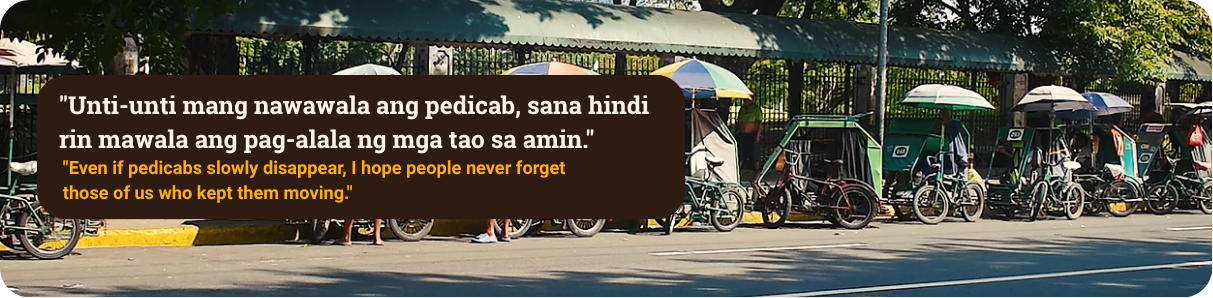
Daily Life – Kuwentong Pedicab
RESEARCH FINDINGS

DAILY LIFE OF A
PEDICAB DRIVER

A story of hard work, resilience, and daily movement through the city.

Behind every pedicab ride is a driver whose daily routine is shaped by long hours, changing weather, physical effort, and the responsibility of earning a living while serving the community. The findings presented on this page draw from interviews with pedicab drivers, passenger surveys, and field observations conducted during the development of Kuwentong Pedicab.

THE CITY STILL
REMEMBERS THEM

The findings presented in this section are based on the Kuwentong Pedicab Study conducted in Metro Manila. The passenger survey involved 62 respondents and explored their perceptions, experiences, and views regarding the cultural and everyday importance of pedicabs. These responses are presented alongside the experiences of pedicab drivers to show how their work connects with the communities they serve.

For pedicab drivers, their work is closely connected to the everyday routines and communities where they operate. In areas such as Intramuros, Quiapo, and Binondo, their presence has become part of neighborhood transportation, familiarity, and historical continuity.

Passenger responses help illustrate this connection. Many respondents recalled childhood memories and everyday trips to schools, markets, barangay centers, and other nearby destinations. These experiences reflect the everyday work of the drivers who make these journeys possible and continue to serve the communities where they work.

Together, the driver experiences and passenger responses help show why pedicab drivers remain connected to Manila's everyday transportation, community life, and cultural memory.

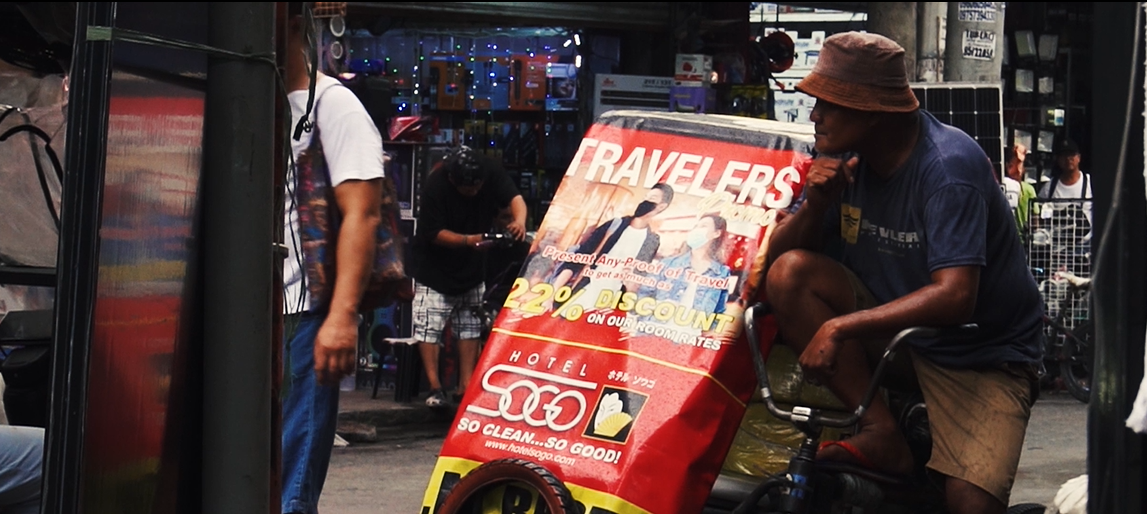
Pedicabs in Manila
83%

52 out of 62 surveyed passengers considered pedicabs important to Manila's cultural identity, reflecting the continued cultural connection between pedicabs, their drivers, and the communities where they work.

73%

45 of 62 surveyed passengers shared personal memories or meaningful experiences involving pedicabs, showing how the work of pedicab drivers has become part of everyday experiences and memories within local communities.

100%

All 62 surveyed passengers strongly agreed that pedicabs should still have a place in the city despite modern transportation, showing that respondents continue to recognize situations where pedicabs and their drivers remain part of everyday transportation.

Pedicab Icon
“But while pedicab drivers remain part of the city's everyday transportation and community life, the systems shaping urban mobility continue to change around them.”
RESEARCH FINDINGS

CHALLENGES THEY
FACE EVERYDAY

Through interviews, observations, and field documentation, pedicab drivers shared the realities they encounter while working, earning a living, and serving their communities. These experiences reveal the financial, physical, environmental, and transportation-related pressures that shape their everyday work.

01

Financial Challenges

Drivers shared that earning a stable income has become increasingly difficult as passenger demand changes and competition from newer forms of transportation increases. Some drivers described significant decreases in their daily earnings, making it harder to meet household and daily expenses.

“Dati umaabot ng ₱700. Ngayon matumal na.”
— Pedicab Driver Discover More →
02

Physical Demands

Pedicab driving requires sustained physical effort, especially during long working hours and difficult road conditions. Drivers continue to pedal, wait for passengers, and work through demanding conditions in order to earn their daily income. For older drivers in particular, the physical demands of the work can become increasingly difficult to sustain.

Discover More →
03

Environmental Challenges

Weather and road conditions directly affect the daily work of pedicab drivers. Heavy rain, flooding, extreme heat, and difficult road conditions can make traveling and waiting for passengers more challenging while also affecting where and how drivers can operate.

Discover More →
04

Challenges in Changing Transportation Systems

Drivers are working within a transportation system that continues to change. The growing presence of e-bikes, motorcycles, app-based services, and other transportation options can reduce passenger demand, while changes in roads, regulations, and infrastructure can also affect where drivers are able to operate.

Discover More →

These challenges show the pressures that pedicab drivers encounter in their everyday work. Despite declining income, physical demands, environmental conditions, and changes in the transportation system, many drivers continue to find ways to work and serve their communities.

RESEARCH FINDINGS

Financial Challenges

A closer look at the experiences and challenges faced by pedicab drivers in the City of Manila.

Introduction

Research Findings

Documentary Evidence

Driver's Quote

Documentary Timestamp
RESEARCH FINDINGS

HOW THEY DRIVERS
CONTINUE TO MOVE

Despite these challenges, pedicab drivers continue to adapt their routines, work strategies, and relationships within the communities they serve. Their experiences show how they adjust to changing conditions while finding ways to continue earning a living and providing transportation.

Adapting Routes

Drivers adjust their daily routes according to traffic rules, road restrictions, flooding, and local conditions. Their familiarity with the streets allows them to use alternative paths when regular routes become difficult to access.

Side Jobs & Deliveries

When income from passenger rides is not enough, some drivers take on additional work such as deliveries, construction, cargo-related work, or other informal jobs. These additional sources of income help them respond to unstable earnings and daily household needs.

Community Support

Drivers also rely on forms of support within the communities where they work. Fellow drivers may share information, routes, tools, or assistance, while relationships with regular passengers can provide familiarity and continued support.

Local Knowledge

Years of working in the same communities give drivers detailed knowledge of local streets, shortcuts, flood-prone areas, traffic conditions, and nearby destinations. This local knowledge helps them navigate conditions that can be difficult for larger forms of transportation.

Resourcefulness

Drivers find practical ways to manage changing conditions, including adjusting their work routines, taking additional jobs, and making use of available opportunities to maintain their livelihoods.

Community Trust

Long-term relationships with passengers and residents can give drivers familiarity within the communities where they work. Regular passengers may return to drivers they know, creating relationships that can contribute to continued work and income.

These strategies show how pedicab drivers adapt to changing economic, environmental, and transportation conditions. Their ability to adjust their work while maintaining connections with their communities reflects the resilience and resourcefulness found throughout their everyday experiences.

RESEARCH FINDINGS

STILL WORKING,
YET OFTEN OVERLOOKED

Despite changes in transportation and urban development, pedicab drivers continue to work in communities where their services remain needed. Yet their work and livelihoods can often go unnoticed within a rapidly modernizing city.

Insights in this section are based on the Kuwentong Pedicab Study conducted in Metro Manila.

62%

of surveyed respondents said they still prefer pedicabs during floods, in narrow roads, or when app-based transport is unavailable. These situations show where pedicab drivers continue to provide a practical transportation option within local communities.

90%

of respondents reported shifting to alternatives such as e-bikes or tricycles, reflecting the changing transportation choices and passenger demand that pedicab drivers encounter in their daily work.

73%

of respondents believe that the history and cultural significance of pedicabs should be formally documented and preserved., supporting the importance of documenting the experiences of the drivers who continue to operate them.

"Kapag wala na ang pedicab, mapipilitan kaming maglakad o gumamit ng mas mahal na transport."
— Survey Respondent, Kuwentong Pedicab Study
RESEARCH ACKNOWLEDGEMENT

BEHIND EVERY STORY IS REAL RESEARCH

The findings, interviews, surveys, and observations presented throughout this page are drawn from the research and field documentation conducted during the development of Kuwentong Pedicab. These findings bring together the experiences of pedicab drivers and perspectives from participants to help document the working conditions, challenges, adaptations, and everyday realities of drivers and the communities they serve.

Take a Ride 🚲
ON THIS PAGE

Explore the Stories Page

×

COMMUNITY
STORIES

Memories, experiences, and reflections from people who have ridden with pedicab drivers in Manila.

Pedicab rides can become part of people's everyday experiences, memories, and connections with local communities. Share your experience, reflection, or story about riding a pedicab and interacting with a driver.

Rhyne

Location: Manila

Yup

Rhyne

Location: Manila

Hello

×