Daily Life – Kuwentong Pedicab
RESEARCH FINDINGS

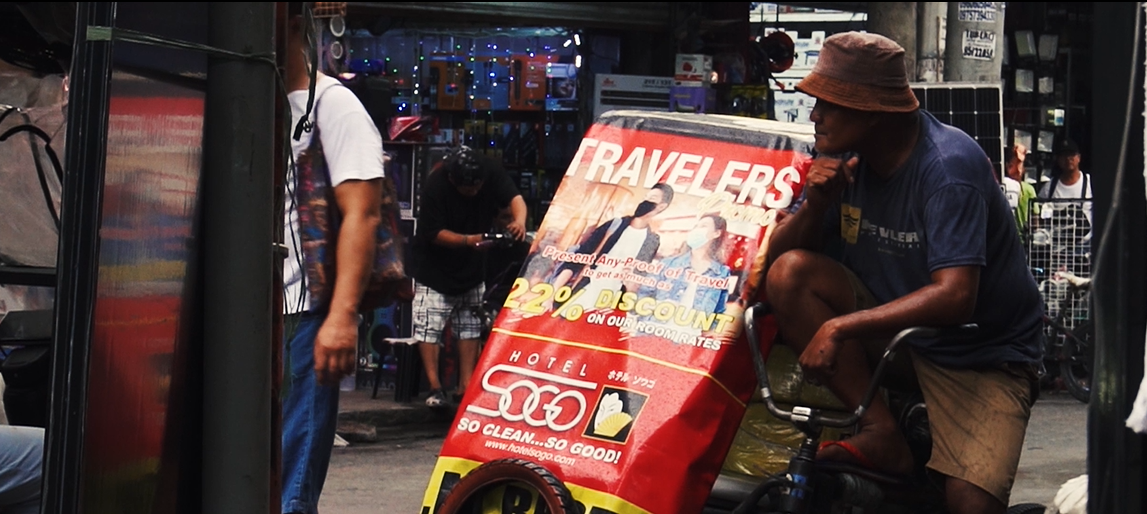
DAILY LIFE OF A
PEDICAB DRIVER

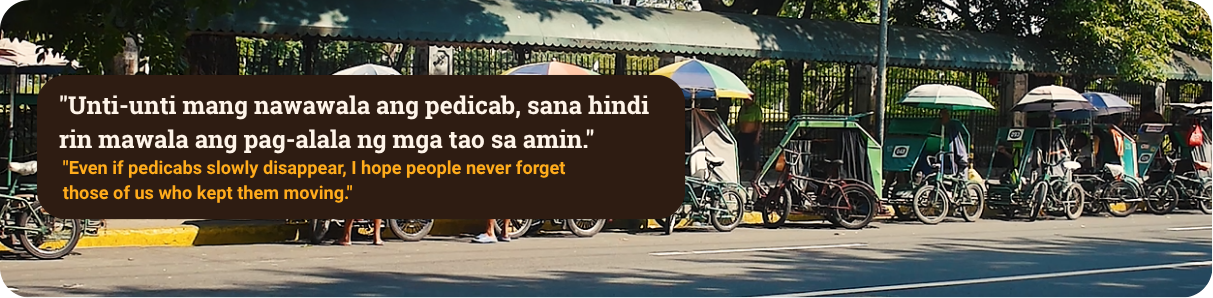
A story of hard work, resilience, and daily movement through the city.

Behind every pedicab ride is a daily routine shaped by long hours, changing weather, physical effort, and the responsibility of supporting a family while serving the community. The insights in this page are based on the experiences of pedicab drivers in Metro Manila, gathered through interviews, surveys, and field observations during the development of Kuwentong Pedicab.

THE CITY STILL
REMEMBERS THEM

The statistics presented in this section are based on the Kuwentong Pedicab Study conducted in Metro Manila. The passenger survey involved 62 respondents and explored their perceptions, experiences, and views regarding the cultural and everyday importance of pedicabs.

Pedicabs have long existed in Manila not only as a form of transportation, but also as part of the city's cultural memory. In areas such as Intramuros, Quiapo, and Binondo, they remain connected to everyday routines, neighborhood identity, and historical continuity.

Many drivers and passengers describe pedicabs as a "kinship" form of transport, similar to the kalesa, representing traditions that continue to exist within rapidly modernizing urban spaces.

Survey responses also show that pedicabs are closely tied to personal and collective memory, including childhood experiences, neighborhood familiarity, and daily trips to schools, markets, and barangay centers.

Pedicabs in Manila
83%

52 out of 62 surveyed passengers considered pedicabs an important part of Manila's cultural identity

73%

45 of 62 surveyed passengers shared personal memories or meaningful experiences involving pedicabs

100%

all 62 surveyed passengers strongly agreed that pedicabs should still have a place in the city despite modern transportation

Pedicab Icon
"But while they remain part of the city's memory, the systems shaping urban mobility are slowly leaving them behind."
RESEARCH FINDINGS

CHALLENGES THEY
FACE EVERYDAY

Through interviews and observations, pedicab drivers shared the realities they encounter while continuing to provide transportation within their communities.

01

Financial Challenges

Drivers shared that their daily income has significantly decreased due to the rise of e-bikes and app-based transport services. With fewer passengers and more competition, earning a stable income has become increasingly difficult.

“Dati umaabot ng ₱700. Ngayon matumal na.”
— Pedicab Driver
02

Physical Demands

Despite harsh weather conditions such as heavy rain and flooding, pedicab drivers continue working because many commuters still rely on them—especially in narrow streets where larger vehicles cannot pass. However, extreme weather often reduces both safety and passenger flow.

03

Environmental Challenges

Pedicabs are increasingly becoming less visible in urban planning as modern transport systems are prioritized. This often leads to reduced recognition of their role, and in some cases, displacement from certain areas.

04

Challenges in Changing Transportation Systems

Pedicabs becoming "invisible" in urban planning. Many drivers, especially older ones, experience physical strain from long hours of pedaling. As they age, keeping up with daily routes and maintaining endurance becomes increasingly difficult, especially in demanding urban conditions.

These challenges highlight the resilience of pedicab drivers, who continue to serve their communities despite economic and structural pressures.

RESEARCH FINDINGS

HOW THEY
CONTINUE TO MOVE

Despite financial, physical, and structural challenges, pedicab drivers continue to adapt through resourcefulness, community support, and deep familiarity with their environment. These coping strategies allow them to sustain their livelihood and remain active members of their communities.

Adapting Routes

Drivers adjust their daily paths depending on traffic rules, road restrictions, and flooding conditions. By using shortcuts and alternative routes, they are able to continue working even when regular paths become inaccessible.

Side Jobs & Deliveries

To supplement declining income from pedicab driving, many drivers take on additional work such as deliveries, construction work, or other informal jobs. This flexibility helps them meet daily family needs despite unstable earnings.

Community Support

Survival is also made possible through small acts of community cooperation. Passengers sometimes offer extra fares or flexibility in payment, while fellow drivers share information, routes, and assistance when needed.

Local Knowledge

Years of experience allow drivers to navigate the city better than most. Their knowledge of alleys, flood-prone areas, and traffic patterns helps them continue operating even in difficult or unpredictable conditions.

Resourcefulness

Many drivers adopt simple and disciplined lifestyles— careful budgeting, daily saving, and making use of available opportunities—to ensure they can continue working and supporting their families.

Community Trust

Long-term relationships between drivers and passengers build trust over time, with many commuters choosing familiar drivers. This steady connection helps drivers sustain their daily livelihood despite economic uncertainty.

These strategies demonstrate not only survival, but the resilience of pedicab drivers who continue to adapt and persist within a rapidly changing urban transport system.

RESEARCH FINDINGS

STILL NEEDED,
YET OFTEN OVERLOOKED

Despite modernization, pedicabs continue to fill transportation gaps that larger systems cannot fully serve. They remain essential in many communities, yet are often underrecognized in modern urban planning.

Insights in this section are based on the Kuwentong Pedicab Study conducted in Metro Manila.

62%

of surveyed respondents said they still prefer pedicabs during floods, in narrow roads, or when app-based transport is unavailable.

90%

of respondents reported shifting to alternatives such as e-bikes or tricycles due to changing commuter demands and transport conditions.

73%

of respondents believe that the history and cultural significance of pedicabs should be formally documented and preserved.

"Kapag wala na ang pedicab, mapipilitan kaming maglakad o gumamit ng mas mahal na transport."
— Survey Respondent, Kuwentong Pedicab Study
RESEARCH ACKNOWLEDGEMENT

BEHIND EVERY STORY IS REAL RESEARCH

The stories, interviews, surveys, and observations presented throughout this page are drawn from the research and field documentation conducted during the development of Kuwentong Pedicab across communities in Metro Manila.

Take a Ride 🚲
ON THIS PAGE

Explore the Stories Page

×

COMMUNITY
STORIES

Memories, experiences, and reflections about pedicabs and traveling in Manila.

Pedicabs are part of many people's daily lives, memories, and communities. Share your experience, reflection, or story about riding a pedicab.

Rhyne

Location: Manila

Yup

Rhyne

Location: Manila

Hello

×